2024
Within a former limestone quarry near Gubbio, the building forms part of a wider transformation of the site as a construction waste recycling facility, now operated by Gruppo Capriotti. The proposal introduces research, education and cultural production alongside the new industrial content, taking the quarry’s geology and history of extraction as subjects of study and public engagement. The building itself reinterprets the industrial shed typology, serving of its structural logic and spatial flexibility to accommodate these new functions.

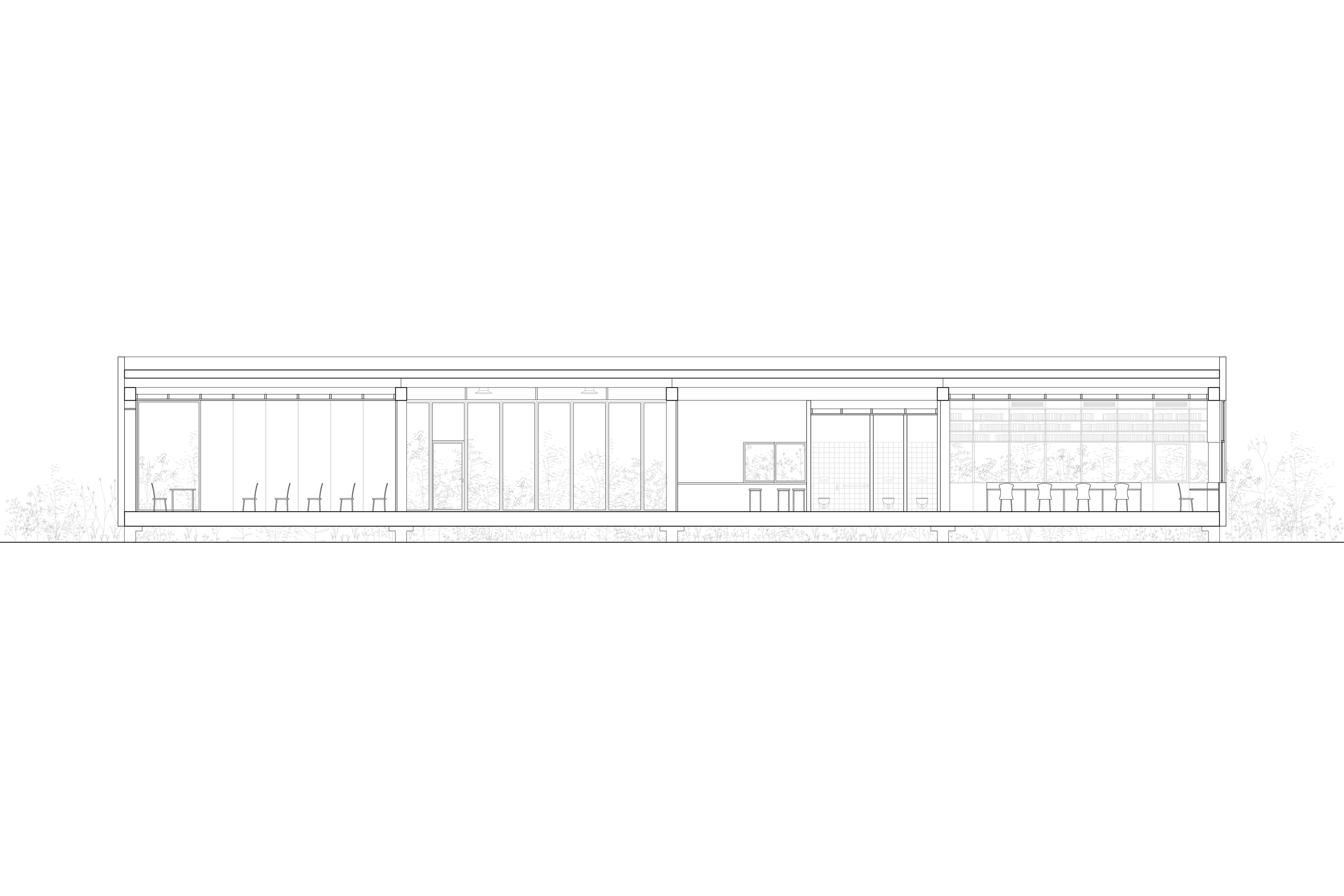


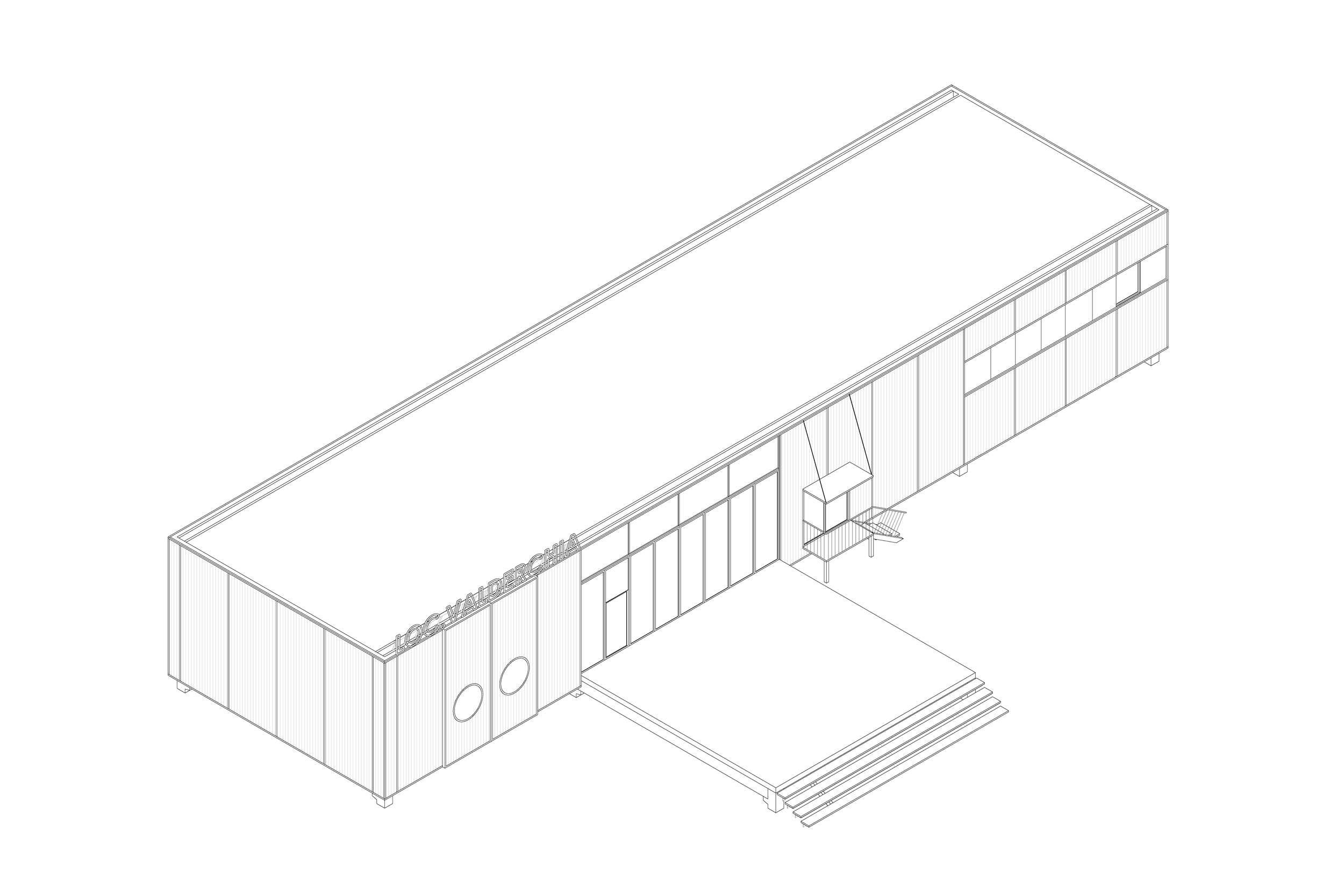
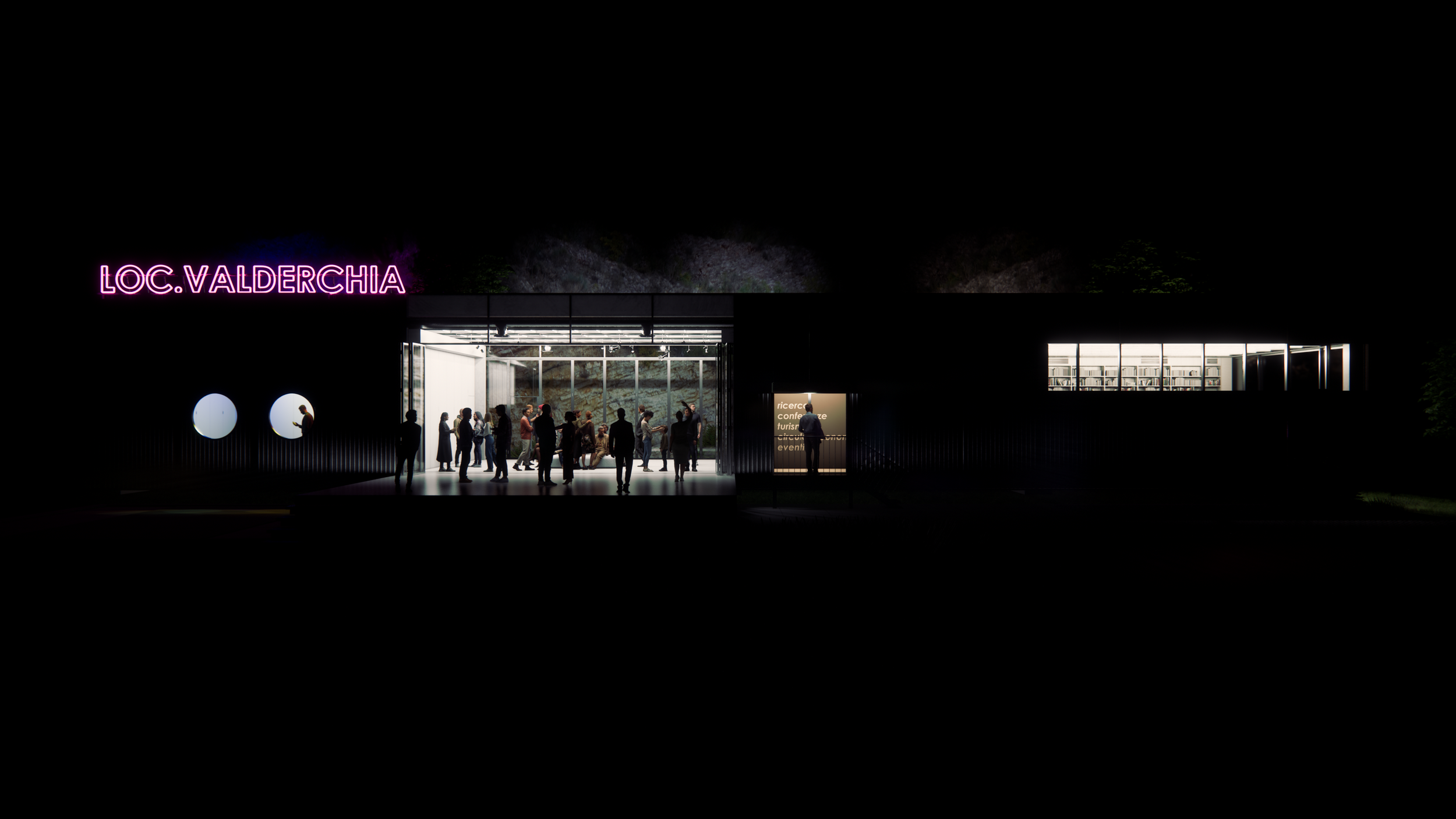
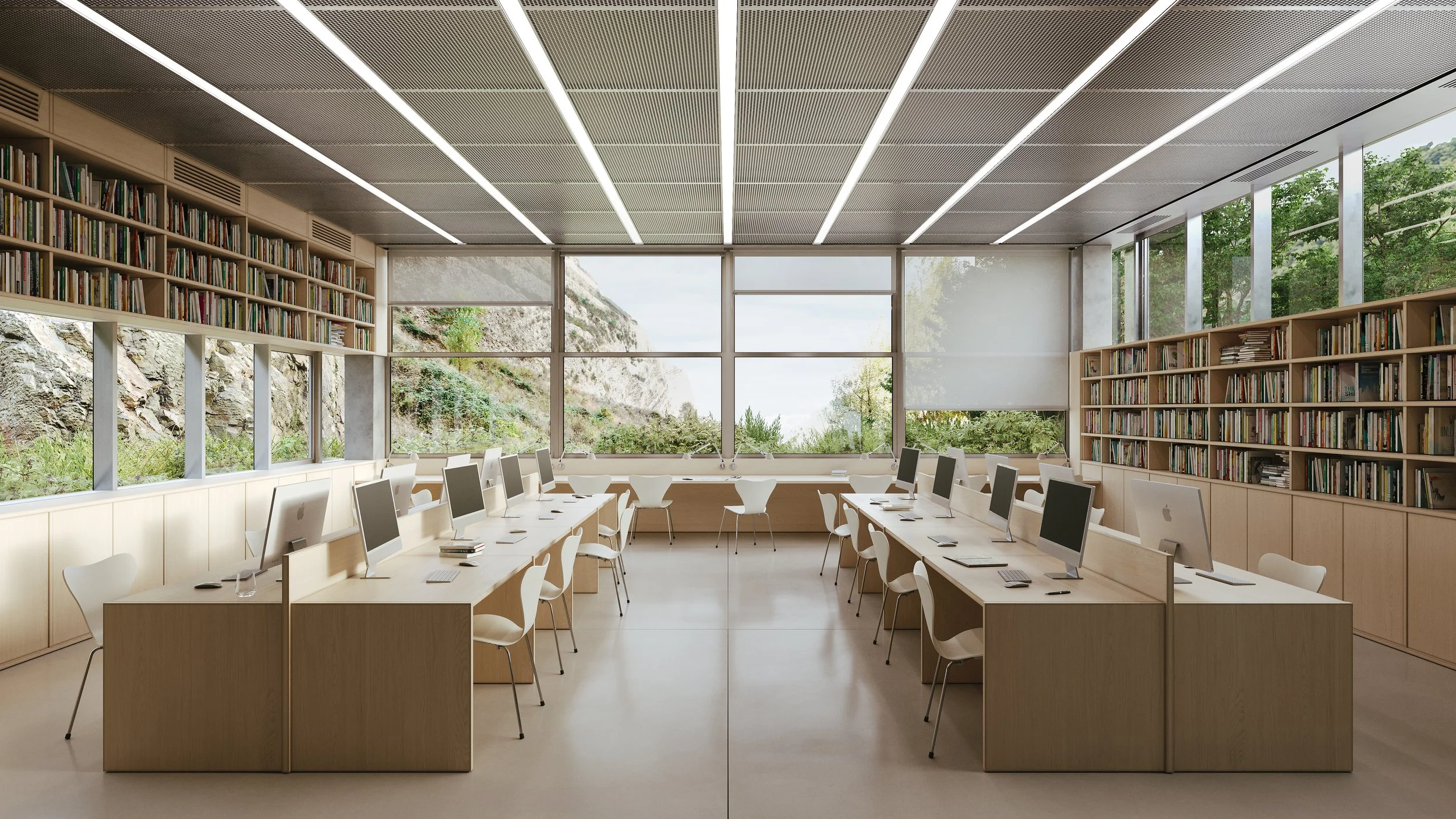
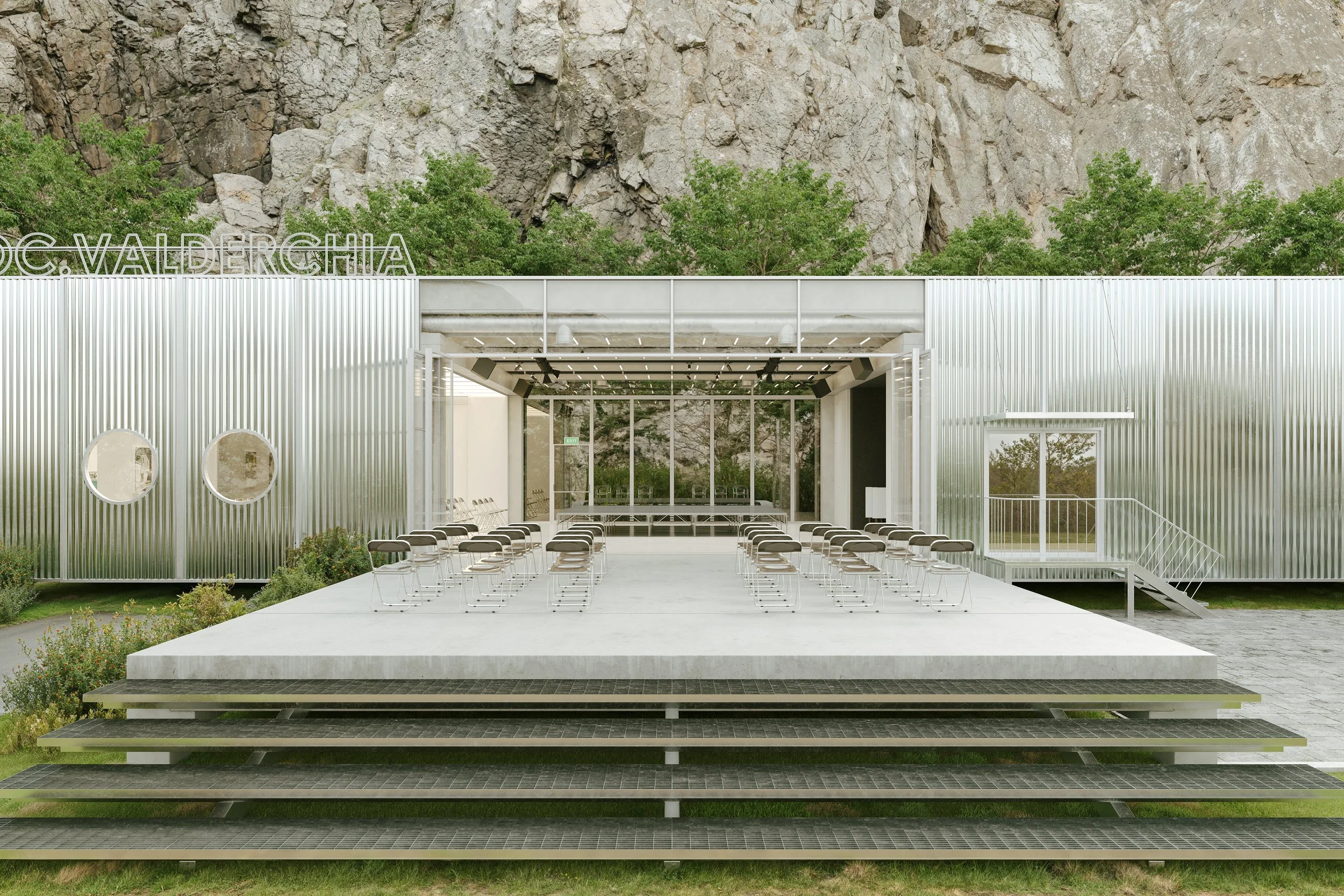
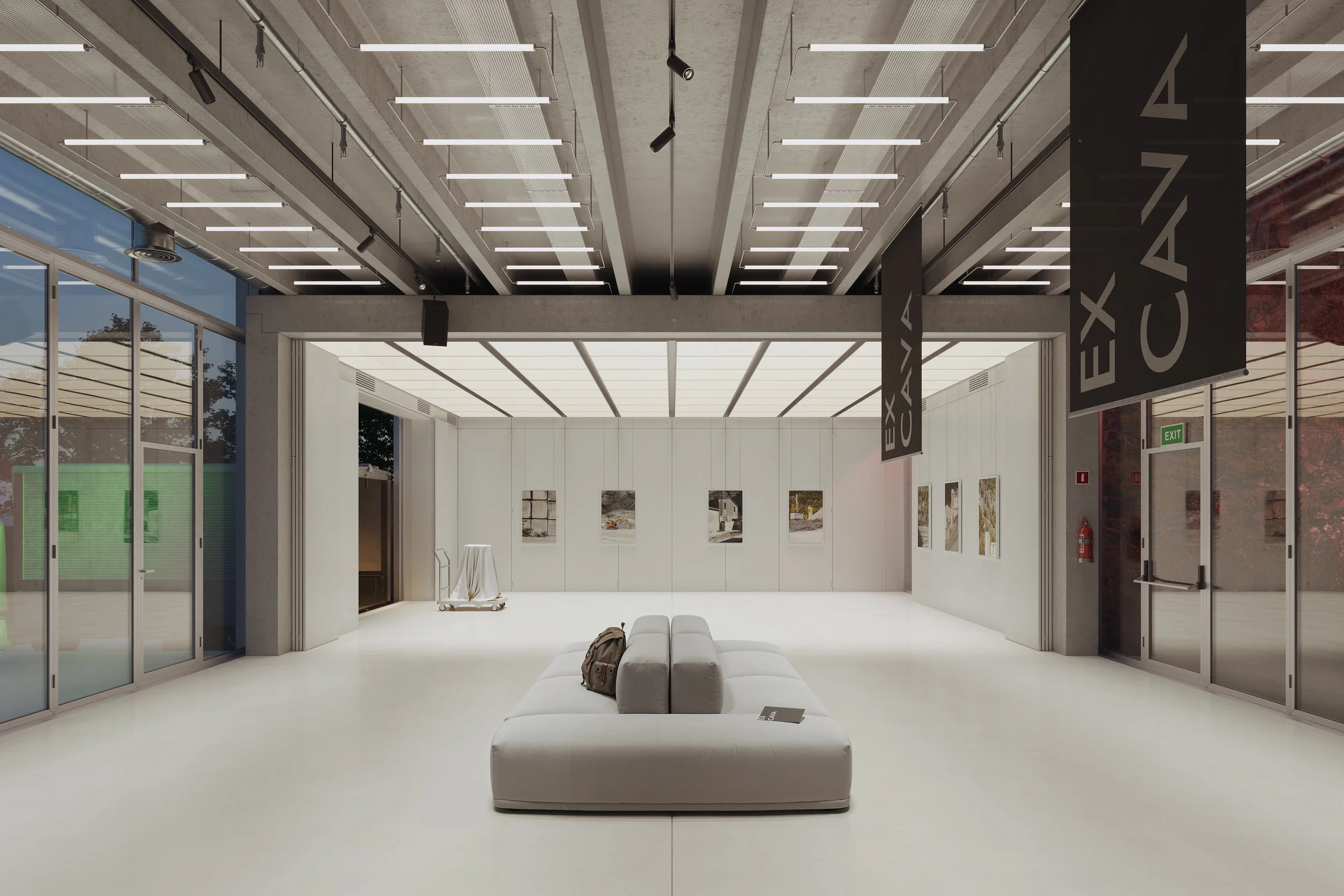
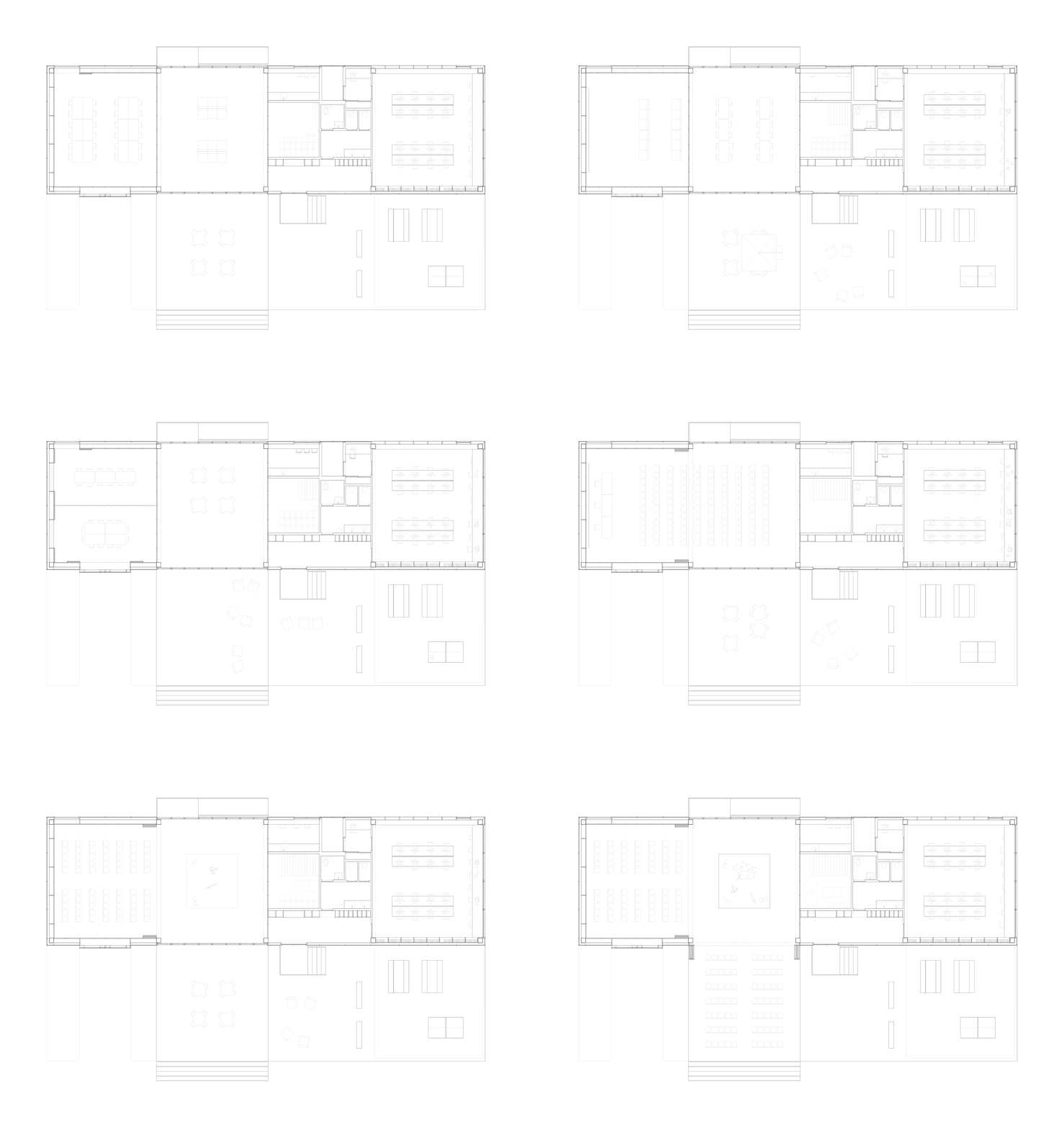
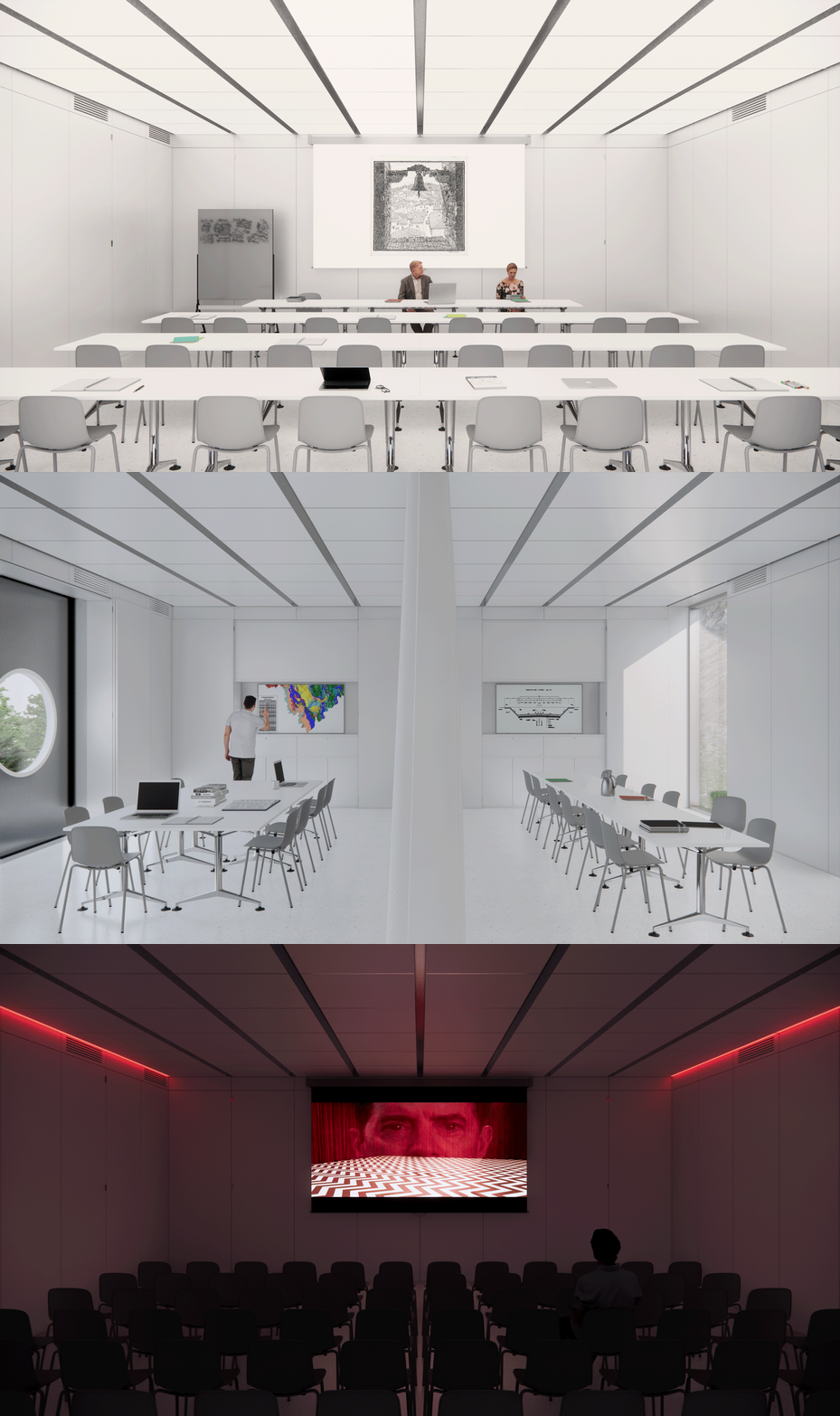
Raised above the ground, the single-storey building runs parallel to the rock face. Four consecutive structural bays, totalling approximately 300 m², house a multipurpose hall, a glazed atrium, a service core and a library. The hall accommodates conferences, lectures, workshops, exhibitions, screenings and concerts.
Folding partitions allow it to be divided into smaller spaces or extended into the atrium. Glazed on both sides, the atrium forms a passage through the building and opens onto a raised terrace. At the opposite end, the study room overlooks the valley.
A modular structure of precast, prestressed concrete elements allows for an open plan. Structural components and services remain exposed. The envelope combines insulated aluminium panels, full-height glazing and brushed corrugated stainless steel. Openings establish direct views of the rock face and the valley, while the corrugated metal reflects and distorts the surrounding landscape, softening the building’s presence within the quarry.

At the edge of the operational site, the building marks the start of a proposed mountain trail connecting the quarry to Gubbio’s historic centre. Its position brings together the working landscape, the public spaces within the building and the route into the surrounding hills. The glazed atrium and raised terrace give this connection a spatial form, offering a moment to pass through. Together, the building and trail introduce public access to a site whose industrial activity remains part of its everyday life.