Palazzo Coppola
Place: Puglia, Italy
Client: Private
Year: 2025
Images: Alba De Angelis
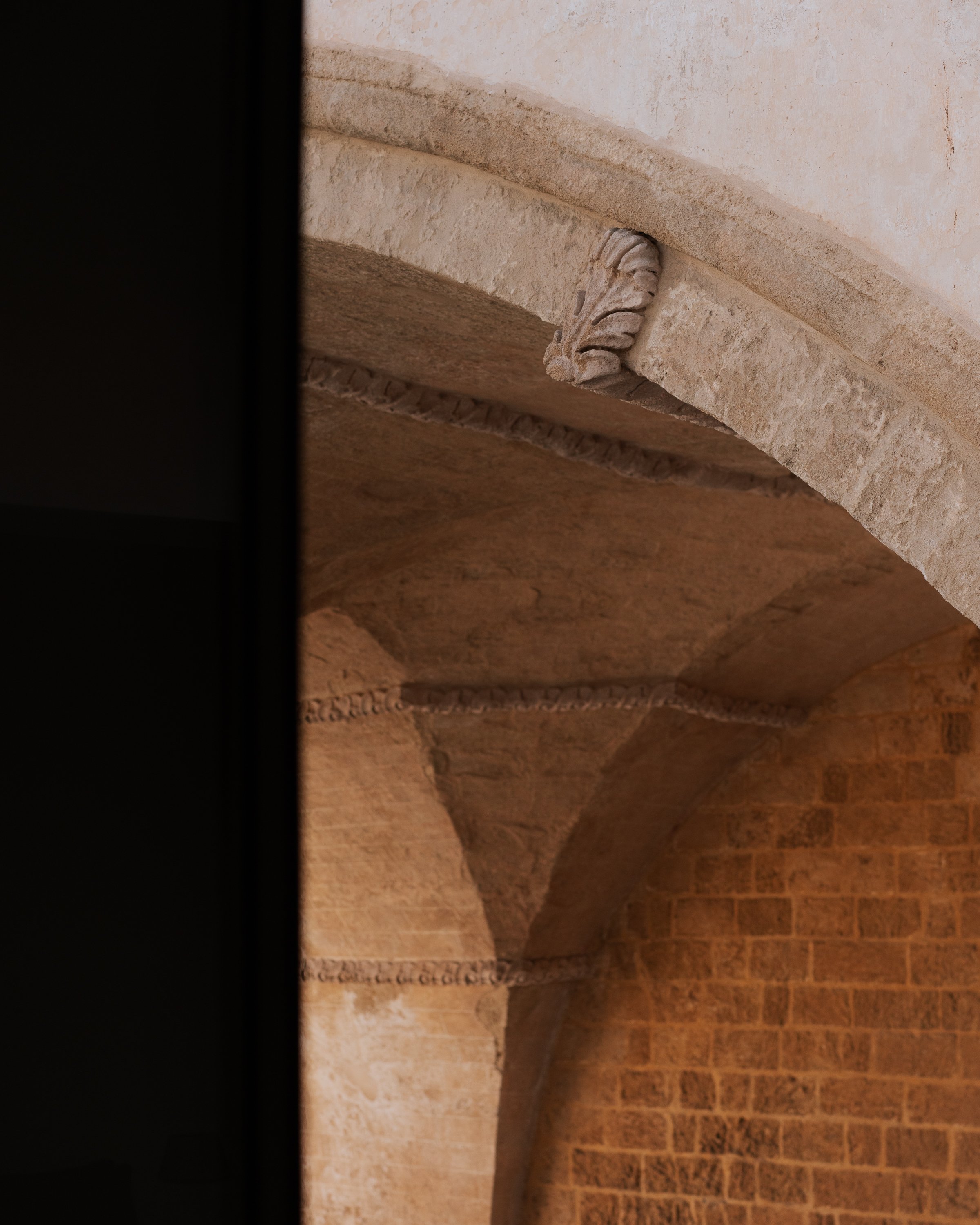
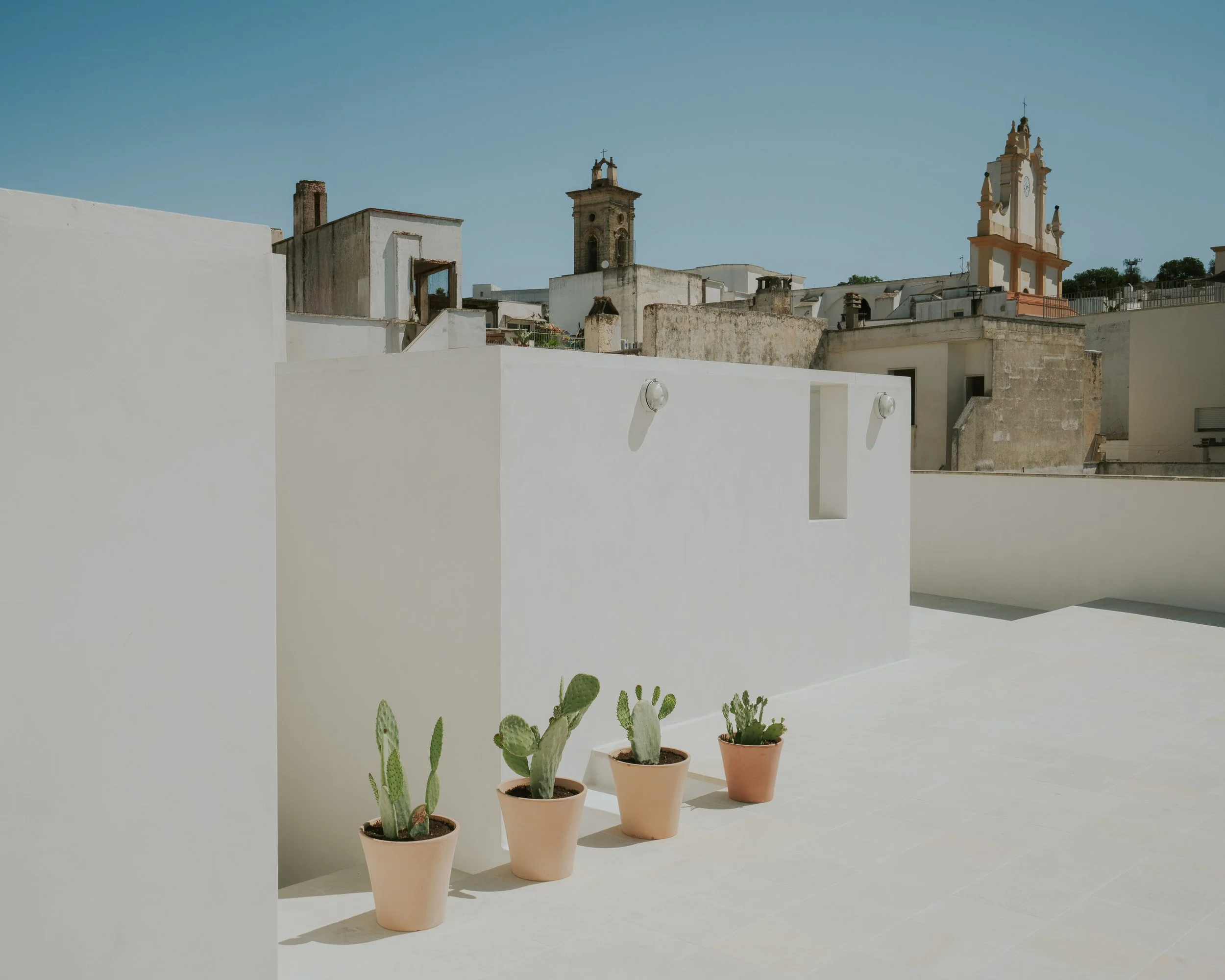
The building is set against a seventeenth-century portico marking the threshold to the old town of Matino and anchoring the earliest phase of the palazzo.
The house comprises around 200 sqm of interiors and a roof terrace of equal size above. Vacant for more than fifty years, the palazzo had undergone alterations that obscured much of its original structure, including a courtyard recorded in the eighteenth-century Onciario cadastre.
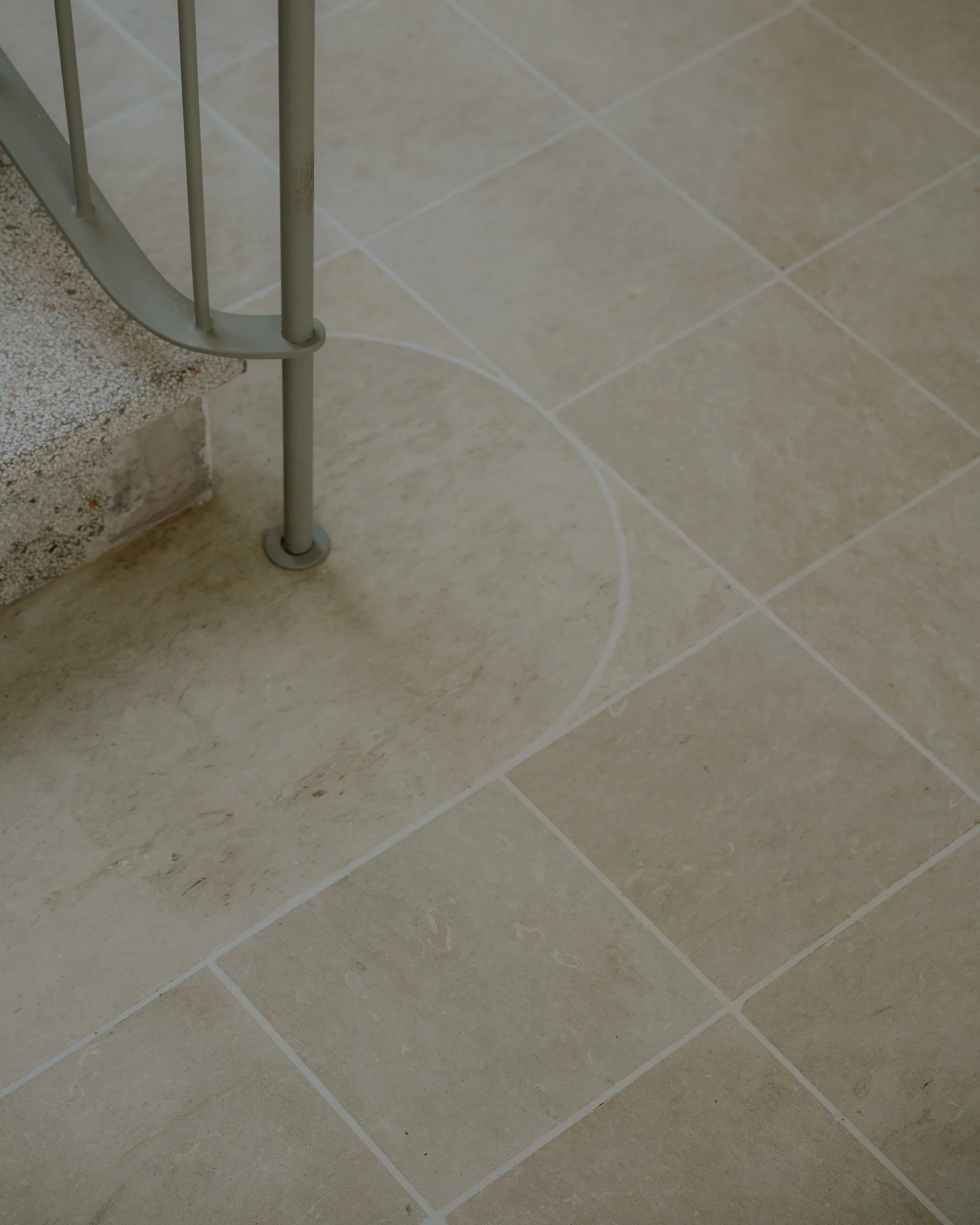
The project consisted of three main interventions: reopening the voids, the vertical extension of their perimeter walls, and the reorganisation of the interiors. The restoration re-established the building’s spatial order without resorting to nostalgia, leaving traces of successive interventions legible in the render and floors.
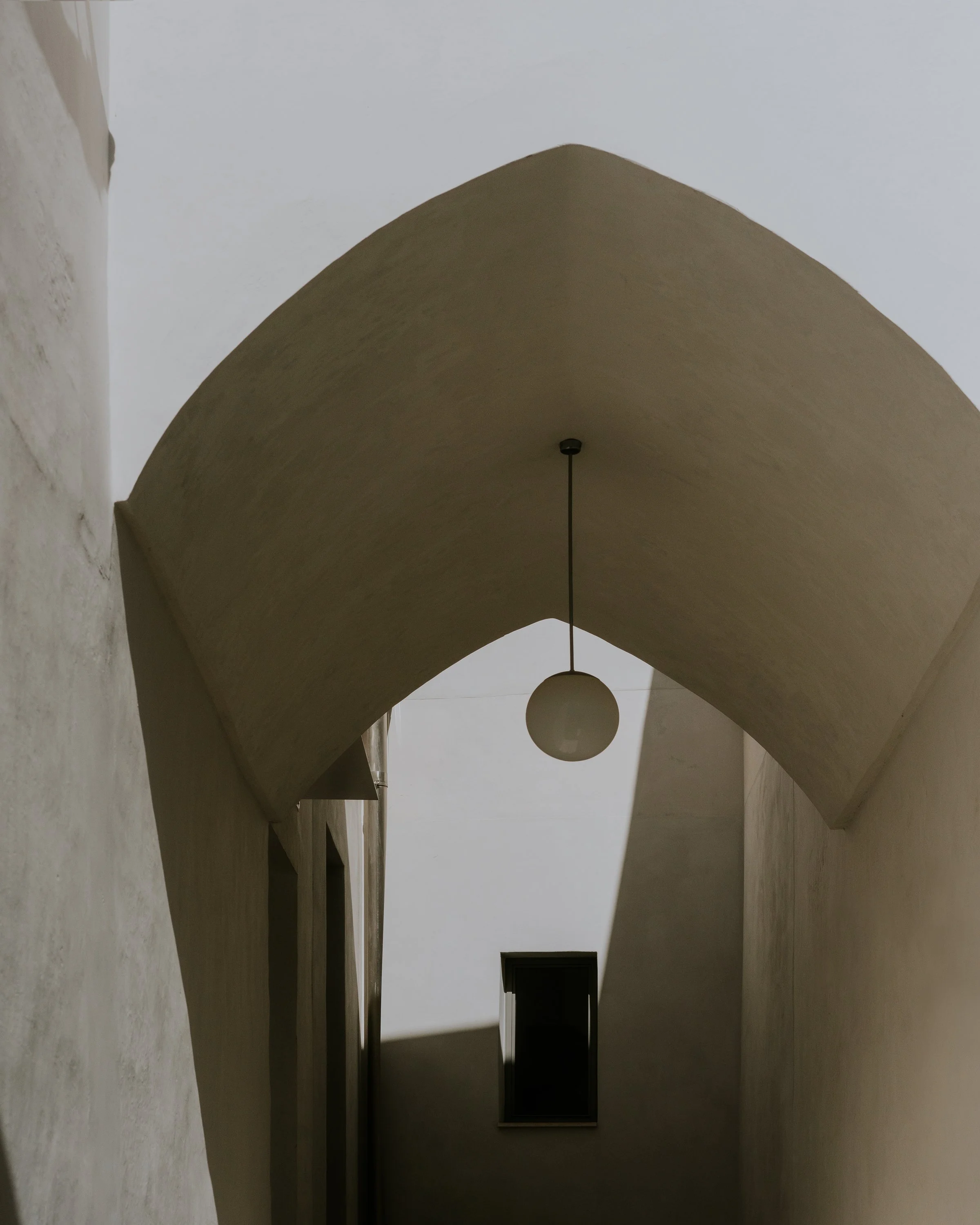
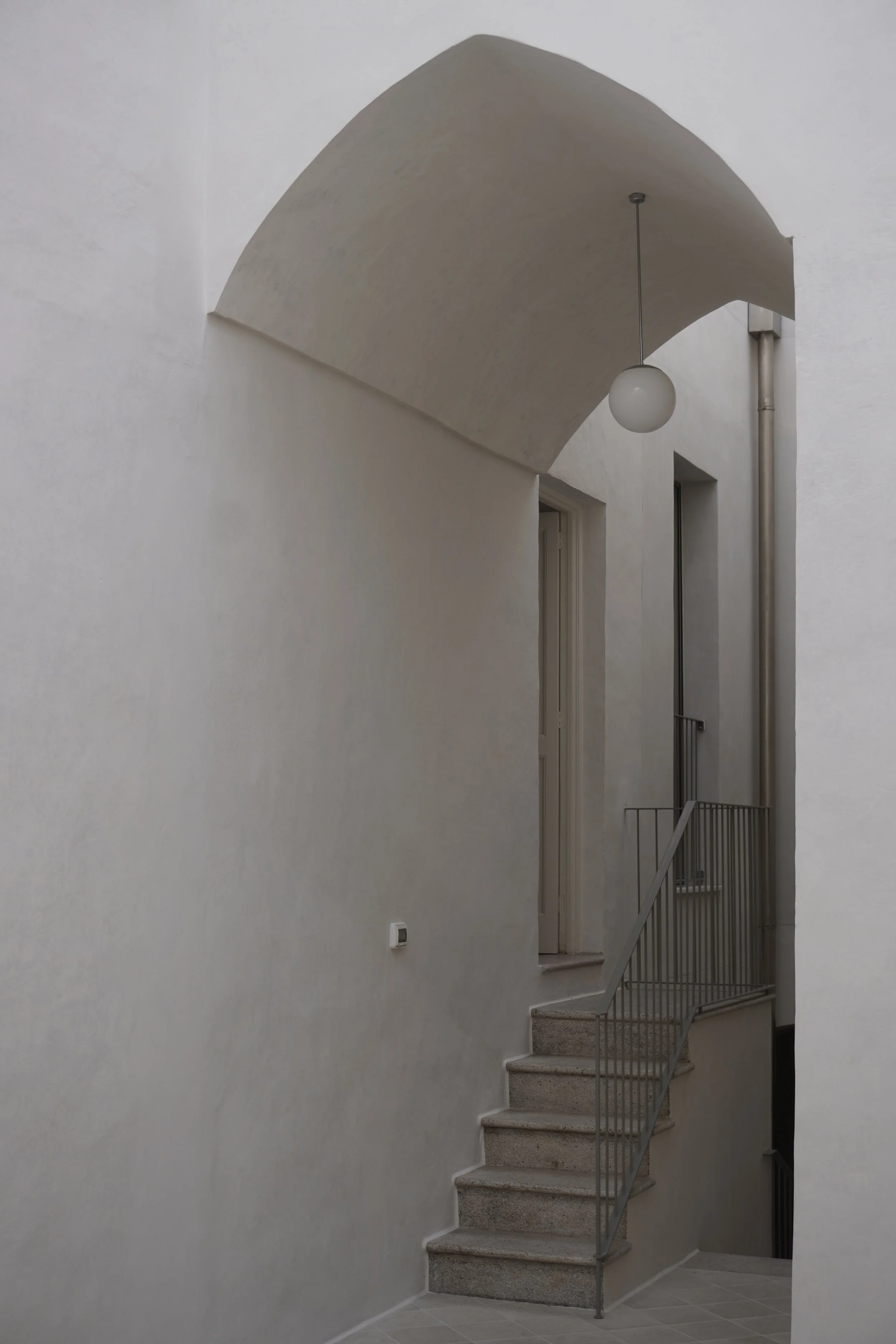
Archival cadastral maps guided the reinstatement of the central courtyard at its original size and revealed the presence of a second lightwell. A pitched archway now reconnects the two, shifting the passage from a roofed space to open sky. The courtyard resumes its role as the organising space of the house, into which the main rooms open, restoring light and air.
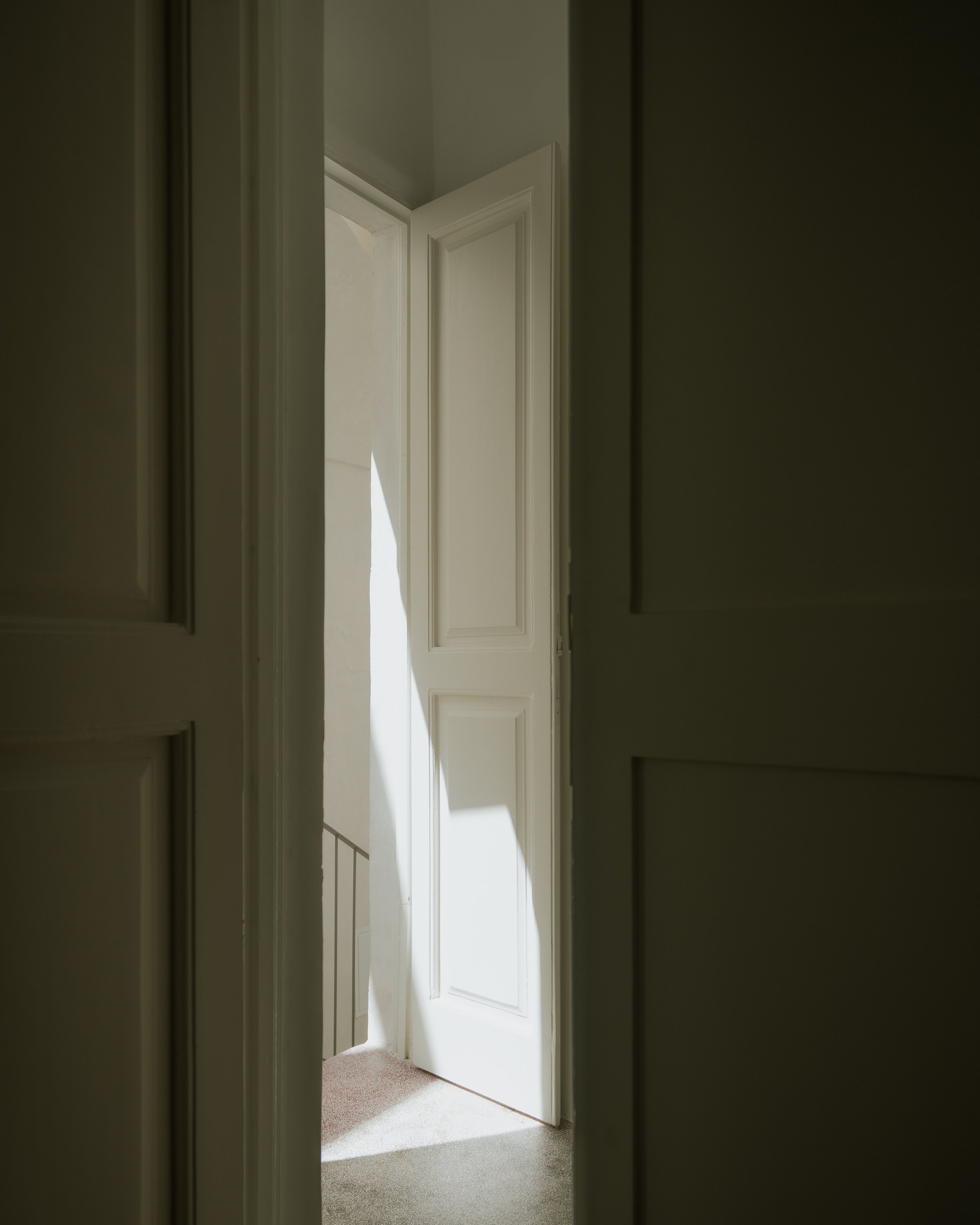
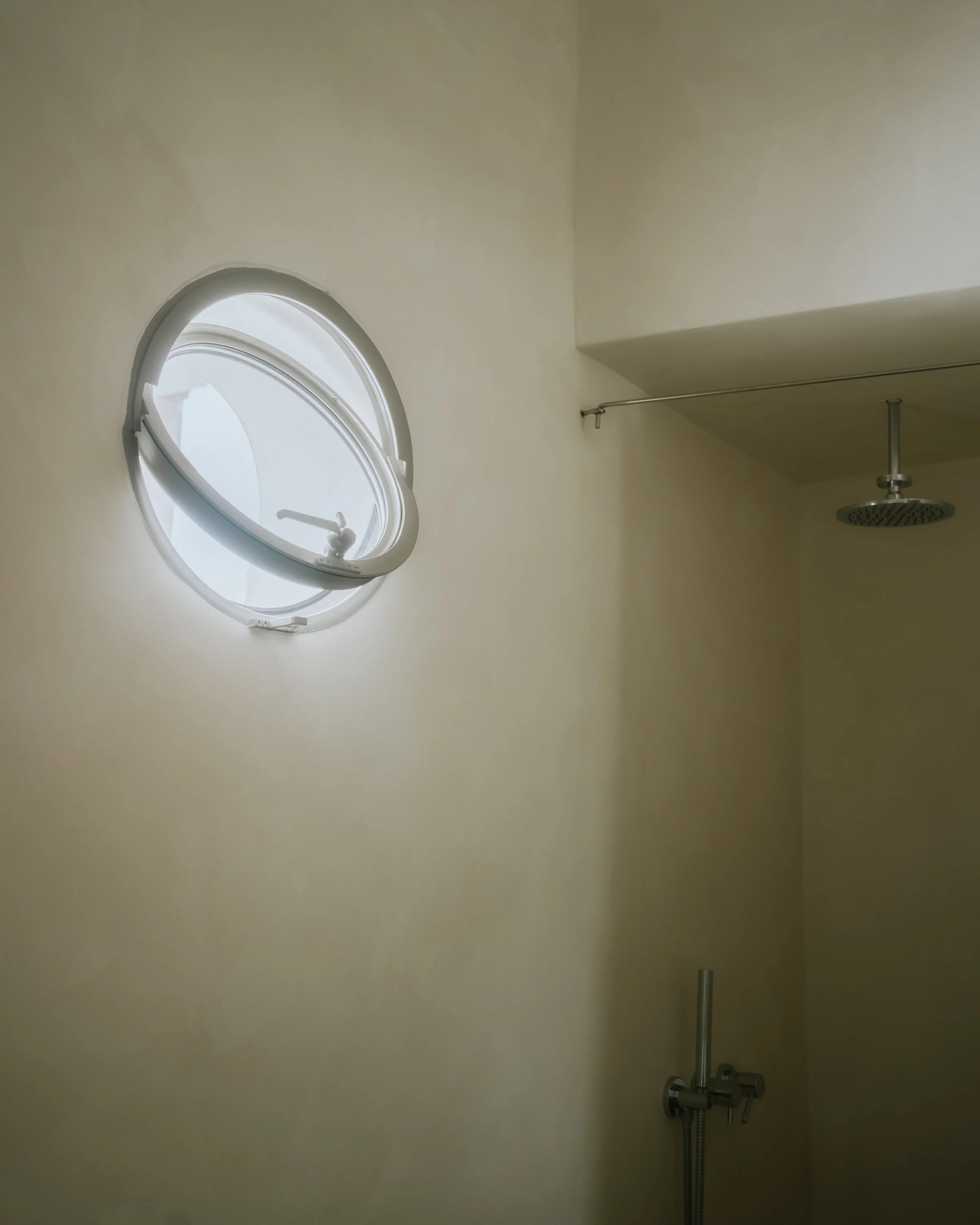
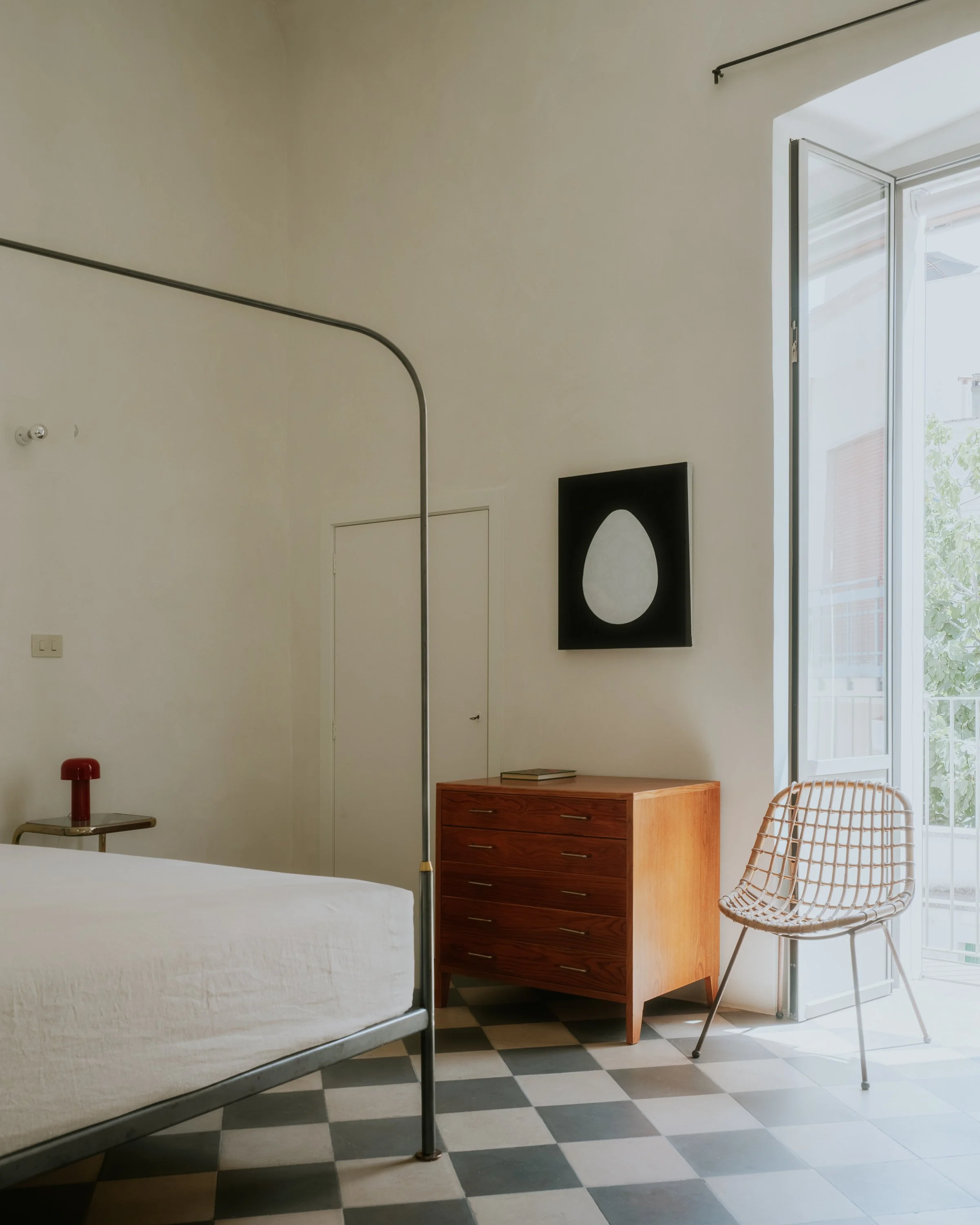
Three bedrooms, each with its own bathroom, are paired with living areas that mediate between the private rooms and the communal spaces around the courtyard.
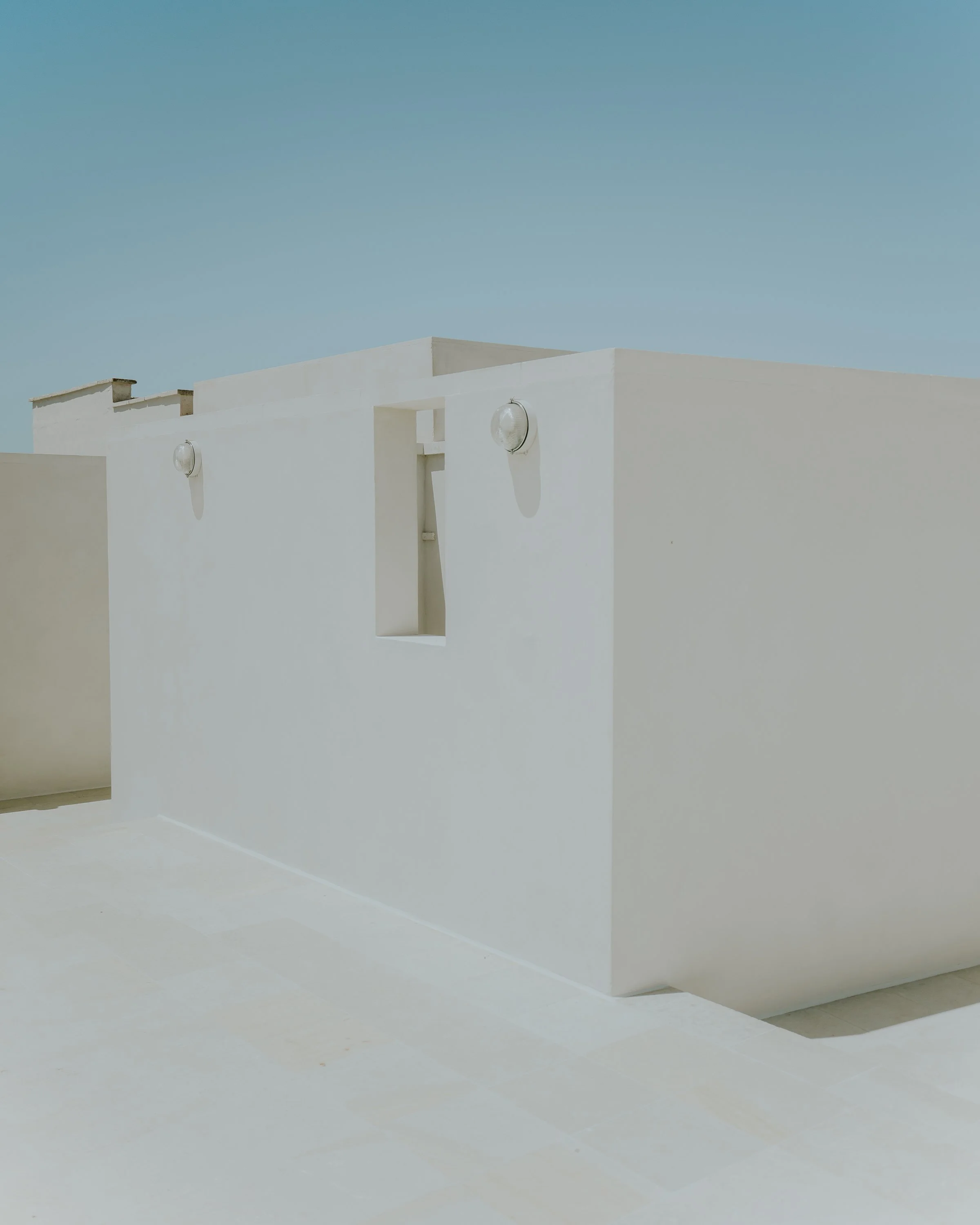
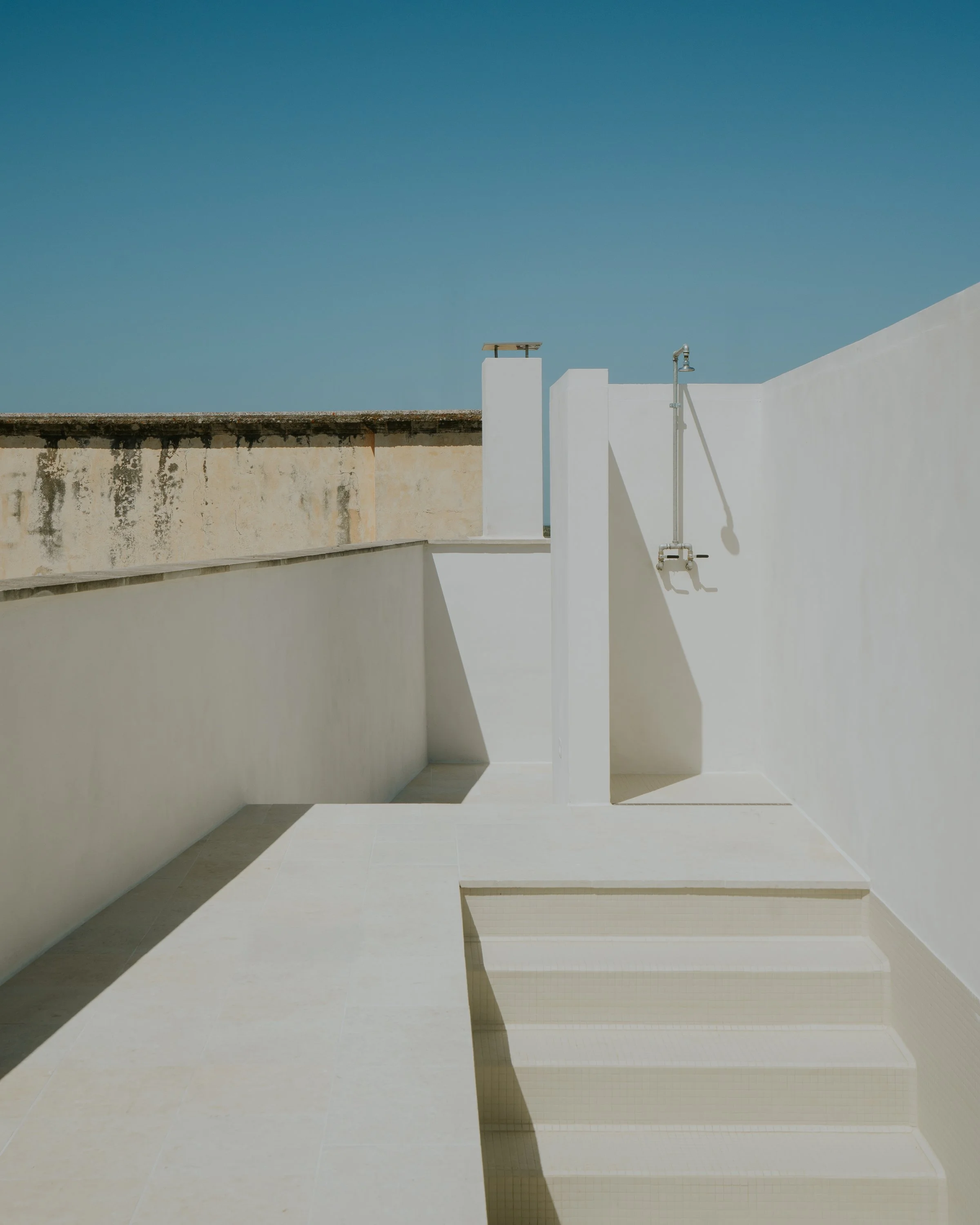
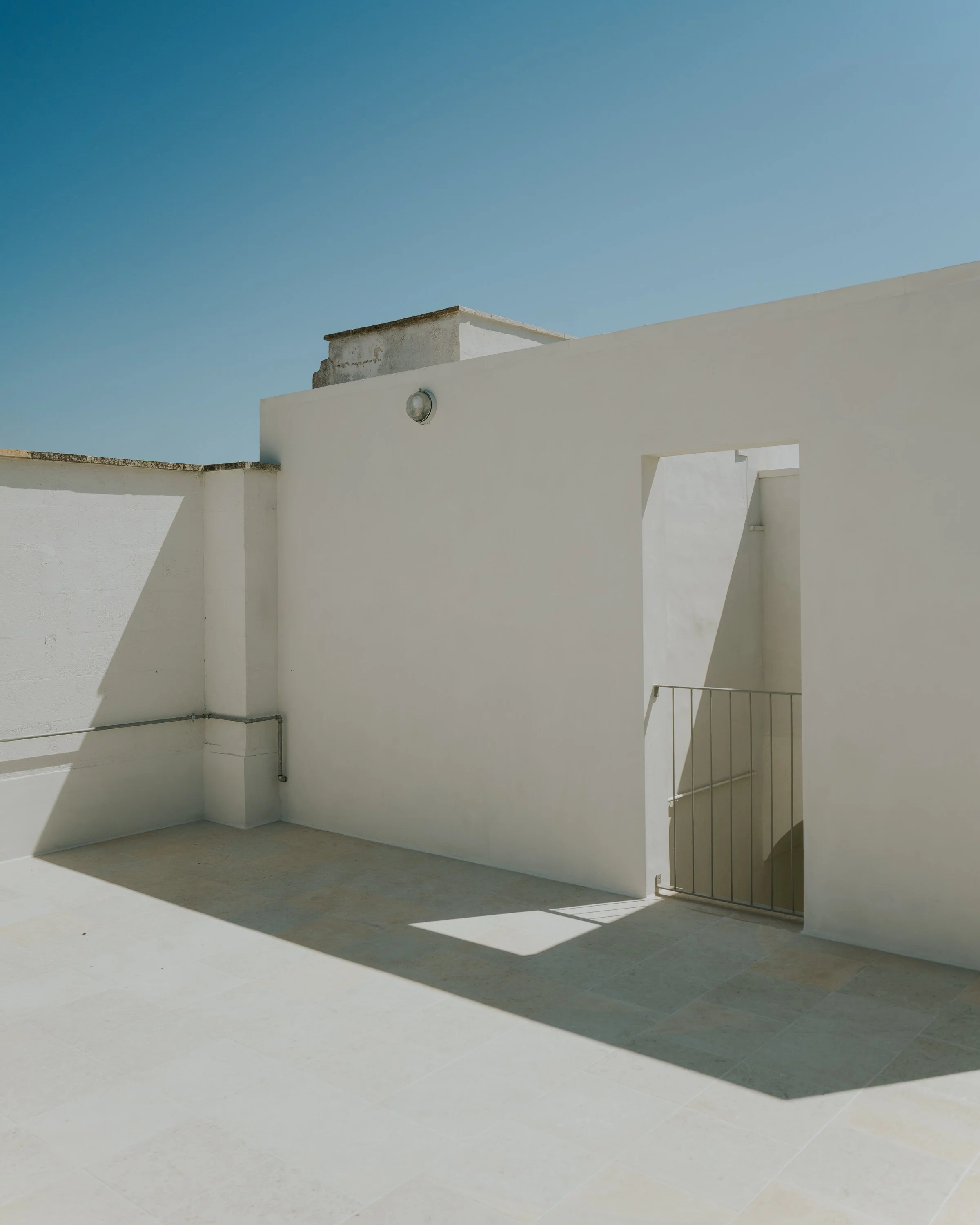
The perimeter walls of the voids were raised, casting shade below. Openings cut into these walls visually connect the roof terrace with the courtyard beneath and assist natural ventilation by drawing warm air upwards.
The roof terrace was conceived as a playground for the family. Once uneven and without hierarchy, it is reorganised as a sequence of open-air rooms. A plunge pool sits above the lower vaults, while an outdoor kitchen occupies the most shaded area. Changing floor patterns trace the footprint of the rooms below. Shifting levels and raised walls allow the terrace to unfold gradually. A continuous parapet line, held at a constant height, works with the stepped levels to frame views differently and create varying degrees of enclosure.